

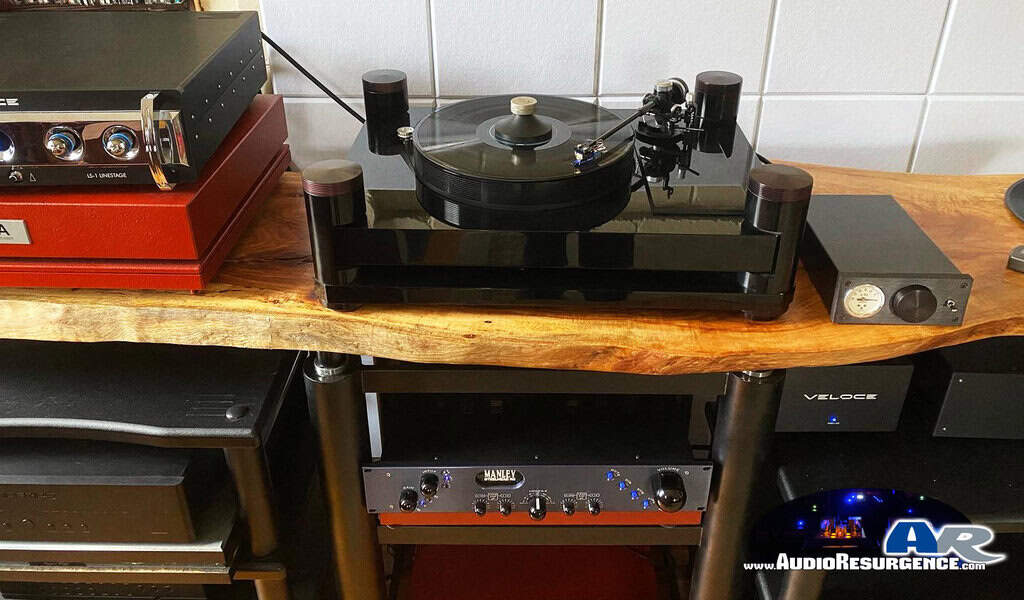
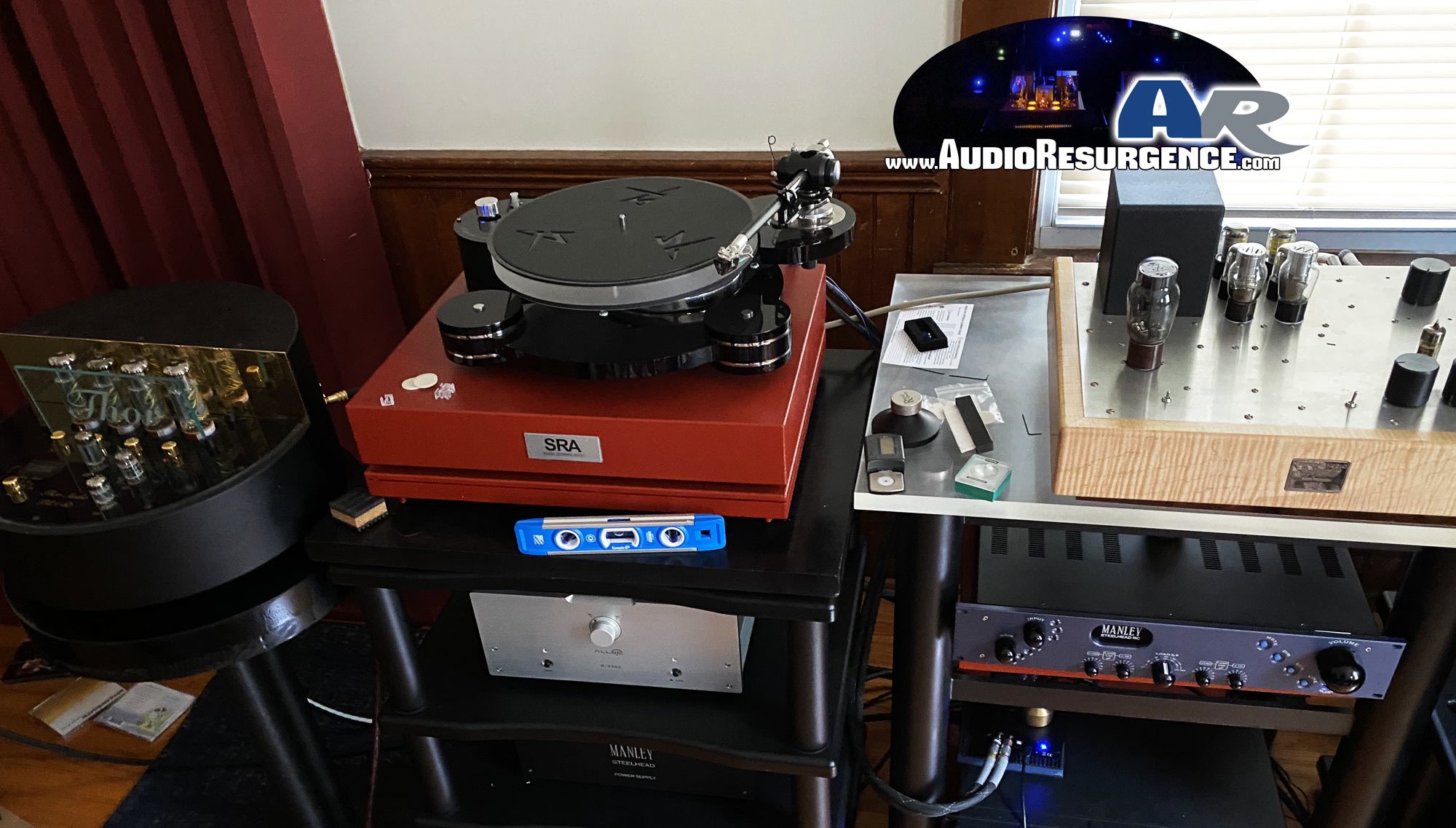
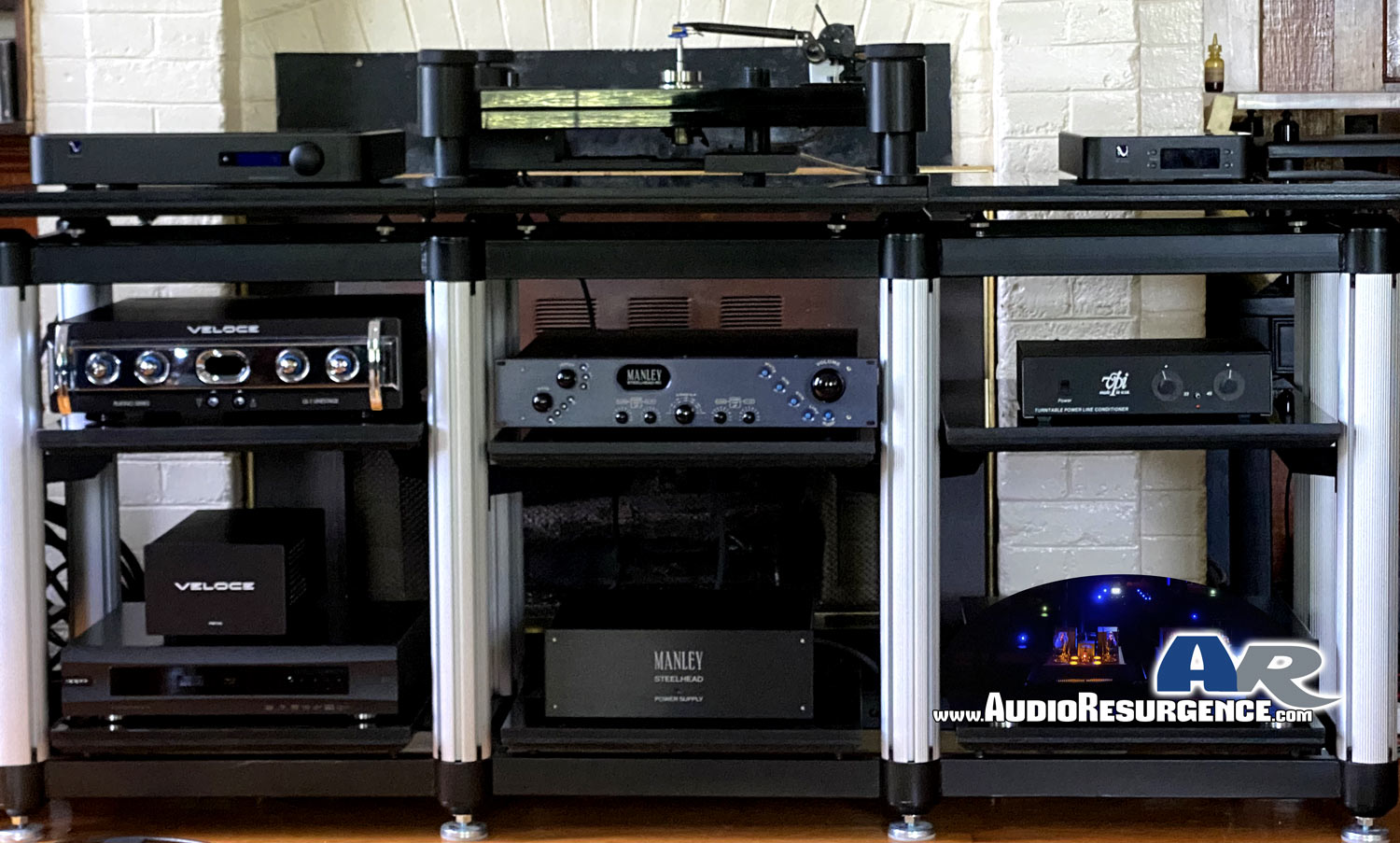
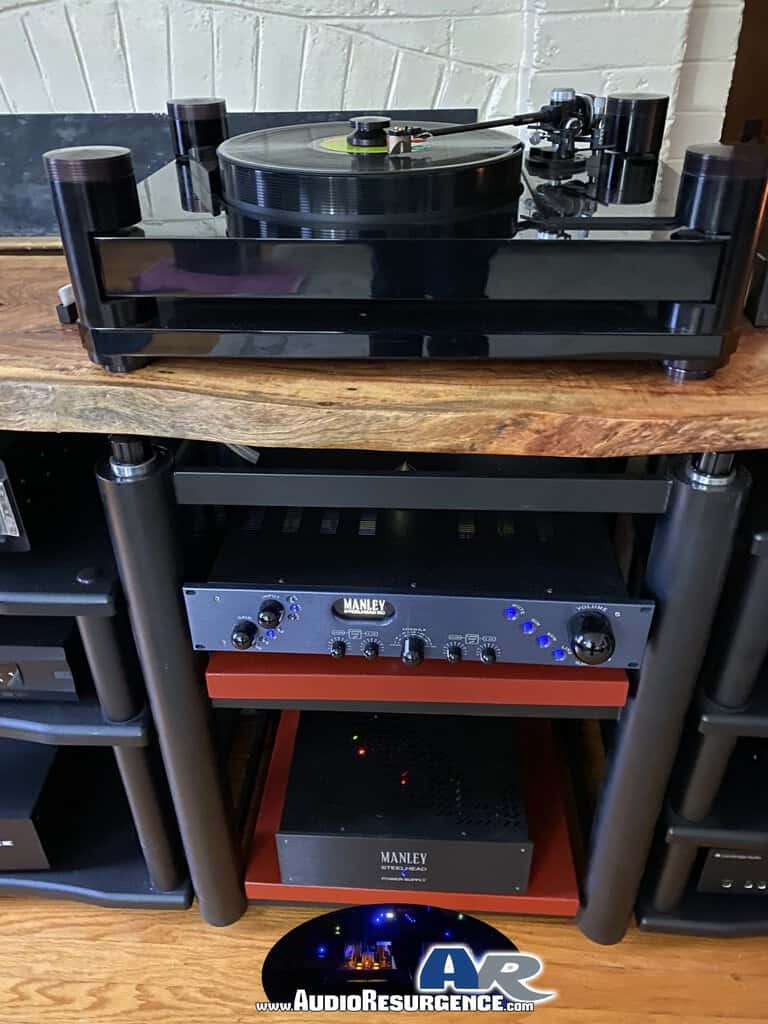
I’ve lived with the Manley Labs Steelhead RC phonostage longer than any other component in my main system. It’s hard-working, reliable, versatile, and sounds great. Unlike many tube preamps that inject their own flavor, the Steelhead focuses on staying true to the source, revealing what’s hidden in the record groove without embellishment or gloss.
Company History & Recent Changes
Manley Laboratories traces its roots to the late 1980s, when it began as a high-end audio brand under the umbrella of Vacuum Tube Logic of America (VTL). In 1989, EveAnna Manley, then a 20-year-old on sabbatical from Columbia University, joined the VTL crew. Starting on the production line, she quickly mastered soldering and assembly, and eventually moved into quality control. Around this time, Manley branched into professional audio gear, debuting its Reference 60dB Mic Preamp and Enhanced Pultec EQs at the 1990 AES show, alongside its now-iconic Reference microphones.
In 1993, Manley Laboratories officially split from VTL, becoming its own independent entity under David and EveAnna Manley. They relocated to Chino, California, establishing a facility with in-house PCB fabrication, transformer winding, engraving, and machine shop capabilities. However, David Manley left the company abruptly, and the country, just three years later in 1996, leaving EveAnna at the helm.
Under her leadership, Manley Labs evolved into one of the most respected names in both pro and hi-fi audio. The late 1990s saw the release of modern classics like the Variable Mu® Compressor (1994), VOXBOX® Channel Strip (1997), Stingray® Integrated Amp (1997), and Massive Passive® EQ (1998).
In the years since, Manley has focused on refining manufacturing and circuit design while upholding its analog, tube-driven ethos.
In 2025, EveAnna stepped down following the company’s acquisition by Dirk Ulrich, founder of Brainworx and Plugin Alliance. Ulrich’s vision is to honor Manley’s legacy while guiding it toward future innovation, ensuring the brand’s mantra holds strong: TUBES RULE.
Technical Specs & Front-Panel Versatility
The Steelhead RC is a feature-rich phono stage that runs six tubes: two Sovtek 6922s for gain and four buffer/output tubes (typically GE 7044 or 5687 types). It offers three phono inputs—two moving coil (MC) inputs via Manley autoformer taps with selectable impedances (25, 50, 100, 200, 400 Ohms) and one resistive moving magnet (MM) input with options including 100, 470, 800, 1000, and 47,000 Ohms. Capacitive loading is selectable on all three inputs from roughly 10 pF to 1100 pF in 10 pF increments.
Gain is switchable (50, 55, 60, 65 dB) depending on cartridge and load settings. The frequency response stays within ±0.5 dB of RIAA, output impedance is low, and both fixed and variable outputs are available. The remote control (RF, not IR) offers reliable volume control across the room. The Steelhead is a large, well-built component with an outboard power supply, aimed at serious analog enthusiasts.

Aesthetics and Ergonomics
The Manley Steelhead is unapologetically industrial in its design – a visual extension of the brand’s house style. Its aesthetic might be best described as Jeep-like, with a whiff of WWII Spitfire cockpit controls. The faceplate is peppered with large, tactile knobs that click with authority and purpose. There’s no mistaking the Steelhead for a dainty piece of audio jewelry, this is a tool, not an ornament. And yet, that utilitarian edge is precisely what gives it character – sturdy, functional, and with a kind of mechanical honesty that’s hard not to like.

Cartridge Choice and Versatility
One of the strengths of the Manley Steelhead is its remarkable versatility when it comes to cartridge matching. Over the years, I’ve run a variety of cartridges through this phono stage, ranging from low-output moving coils to high-output moving irons, and in almost every case, the Steelhead has proven itself not only compatible, but capable of extracting something special from each design.
Notable cartridges I’ve successfully run include the classic AudioQuest AQ7000fe, a moving coil design with a delicate and detailed top end, the rare Audio Tekne MC-6310, which is the most detailed and dynamic cartridge I’ve ever used, (while able to remain smooth and natural), and the Benz Micro LP-S, a cartridge of which I was never too fond. The ZYX Ultimate 100 MC was enjoyable, particularly mounted on the Origin Live Illustrious, riding on the Resolution turntable. Each of these cartridges benefited from the Steelhead’s front-panel loading controls and active gain stage options, allowing me to tailor the impedance and gain settings to suit not just the cartridge specs, but also my system’s overall tonal balance and dynamic behavior.
Interestingly, despite the Steelhead’s versatile gain options and dedicated MC transformers, I found myself consistently preferring the MM input across a wide range of cartridges. The MM stage offers surprisingly high gain—enough to handle even very low-output moving coils without issue. One standout pairing was with the wonderful Audio Tekne MC-6310, which outputs just 0.1mV. Even with such a faint signal, the Steelhead’s MM stage provided excellent drive, ultra-low noise, and a sense of immediacy that rivaled or exceeded the MC transformer input. There’s a certain purity to the MM path in the Steelhead, with fewer handoffs, no transformer coloration – and in my system, that often translated into a more vivid and natural presentation.
One of the more revealing pairings has been with the Soundsmith Zephyr MIMC Star, a moving iron design that occupies a somewhat ambiguous space between MM and MC. The Zephyr’s electrical behavior, particularly its relatively low inductance and high current draw, makes it tricky to match with phono stages that rely purely on capacitive or resistive loading. In the case of the Steelhead, proper loading requires the manual insertion of resistors into the dedicated loading sockets on the rear panel. It’s not a plug-and-play affair, and to be honest, it’s something I never got into.
As Peter Ledermann (Soundsmith founder) has noted in online forums, the Zephyr, and other MI designs from his stable, benefit from extremely precise loading in order to avoid excess treble energy or midband suck-out. Other Steelhead owners report successfully integrating the Zephyr and similar designs with the Steelhead by soldering inline resistors, I never took the time to go down that route. In fact, the Zephyr worked just fine for me with the Steelhead, so I never felt the need to take the extra steps outlined by Ledermann and other Steelhead owners.
In short, the Steelhead isn’t just versatile on paper, it’s a true cartridge-matching tool in practice. Whether you’re swapping between vintage low-output moving coils or modern moving iron designs, the combination of loading flexibility, active and transformer gain options, and a dead-quiet noise floor make the Steelhead a long-term reference-grade phono stage for those who live with multiple arms or like to rotate cartridges regularly.

Partnering Equipment
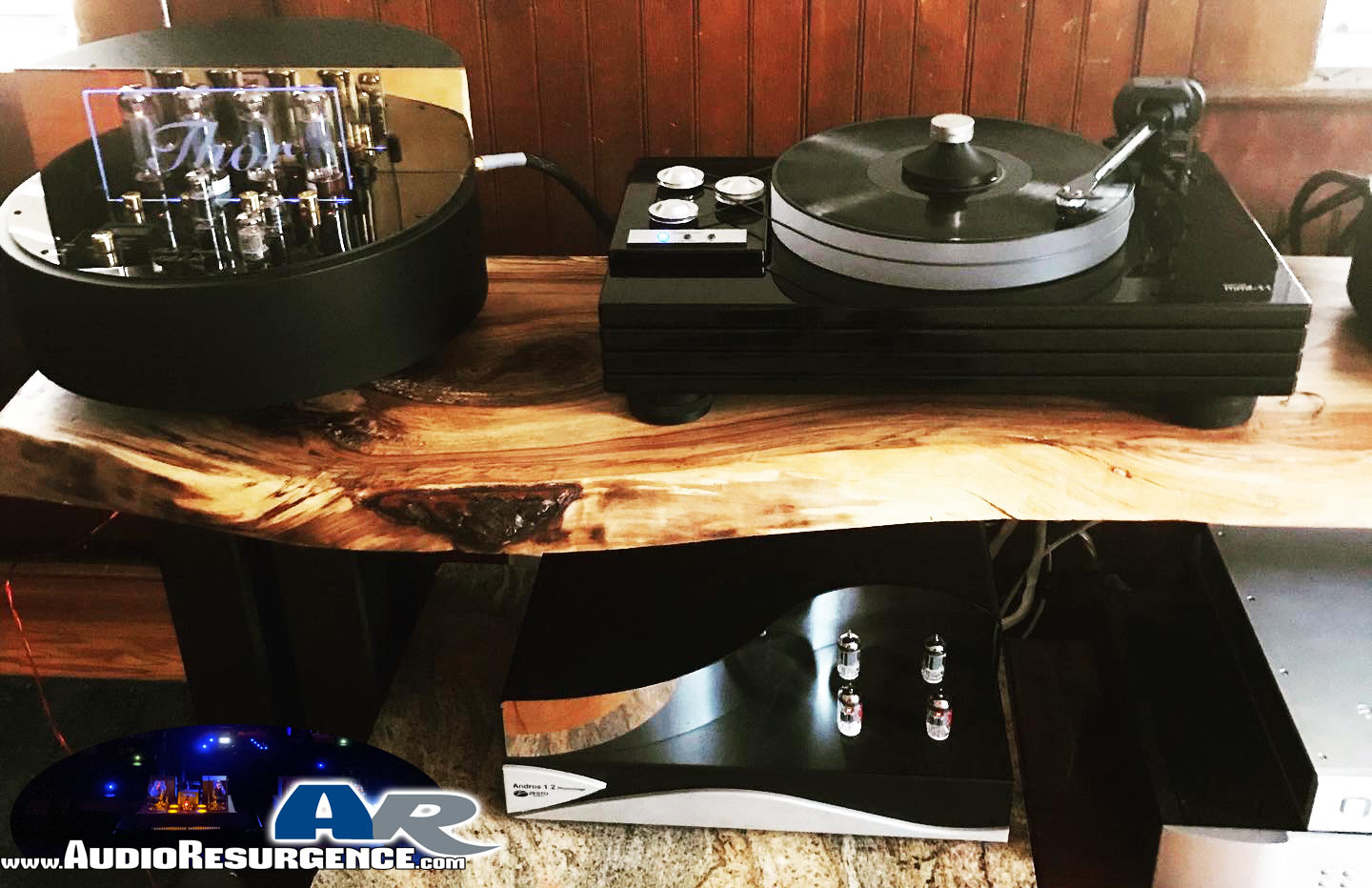
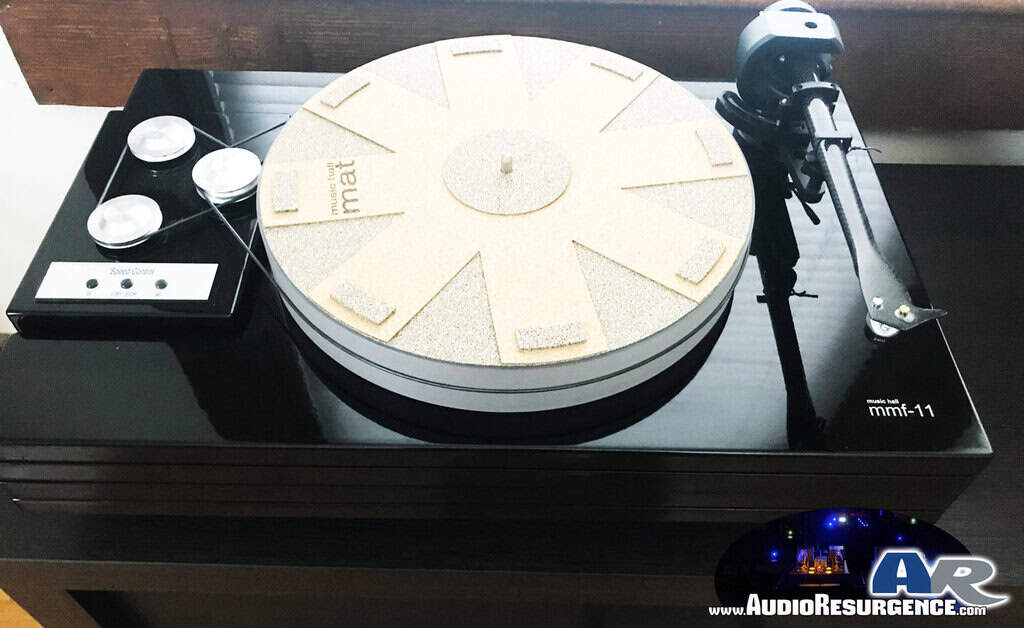
Over the years, I’ve run a wide variety of turntable and tonearm combinations through the Steelhead, and it has consistently proved itself to be adaptable, revealing, and unfussy in terms of system synergy. Early on, I paired it with the Music Hall MMF-11 with a Rega arm. That was followed by the Dr. Feickert Volare, fitted with both the Origin Live Silver and a Jelco S-250 arm. The Volare offered a clear step up from the MMF-11, and the Steelhead responded with increased layering and low-end solidity.
Later came the Origin Live Resolution MKIV with the Illustrious MKIIIC tonearm, a setup that proved exceptionally resolving, and served as a real showcase for the Steelhead’s dynamic agility and tonal balance. The Dr. Feickert Woodpecker with a Kuzma Stogi 12 VTA arm brought even more composure and authority, especially in the lower octaves, while the Wilson Benesch turntable with its carbon-fiber Act tonearm introduced a speed and transparency that the Steelhead had no trouble communicating.
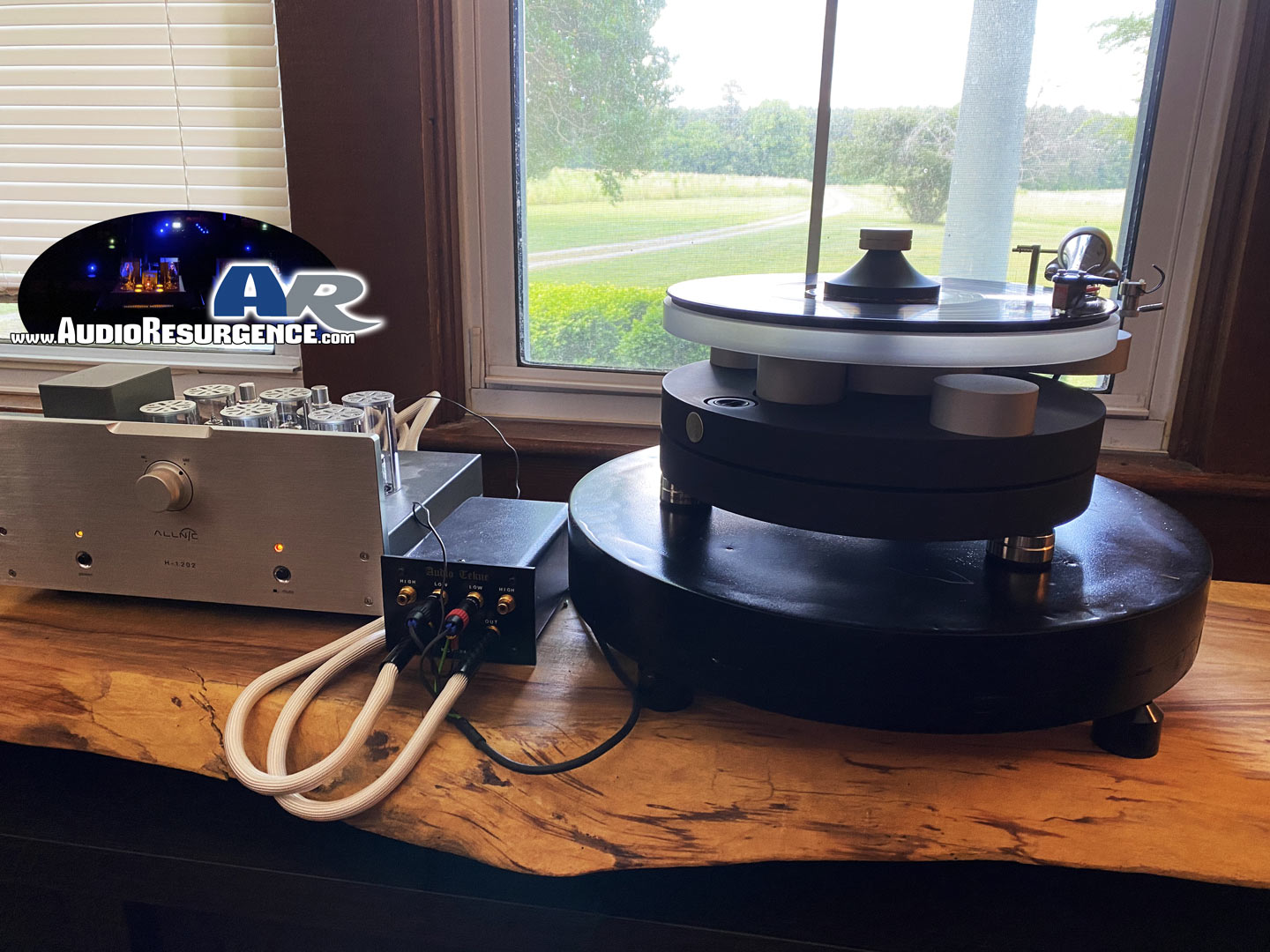
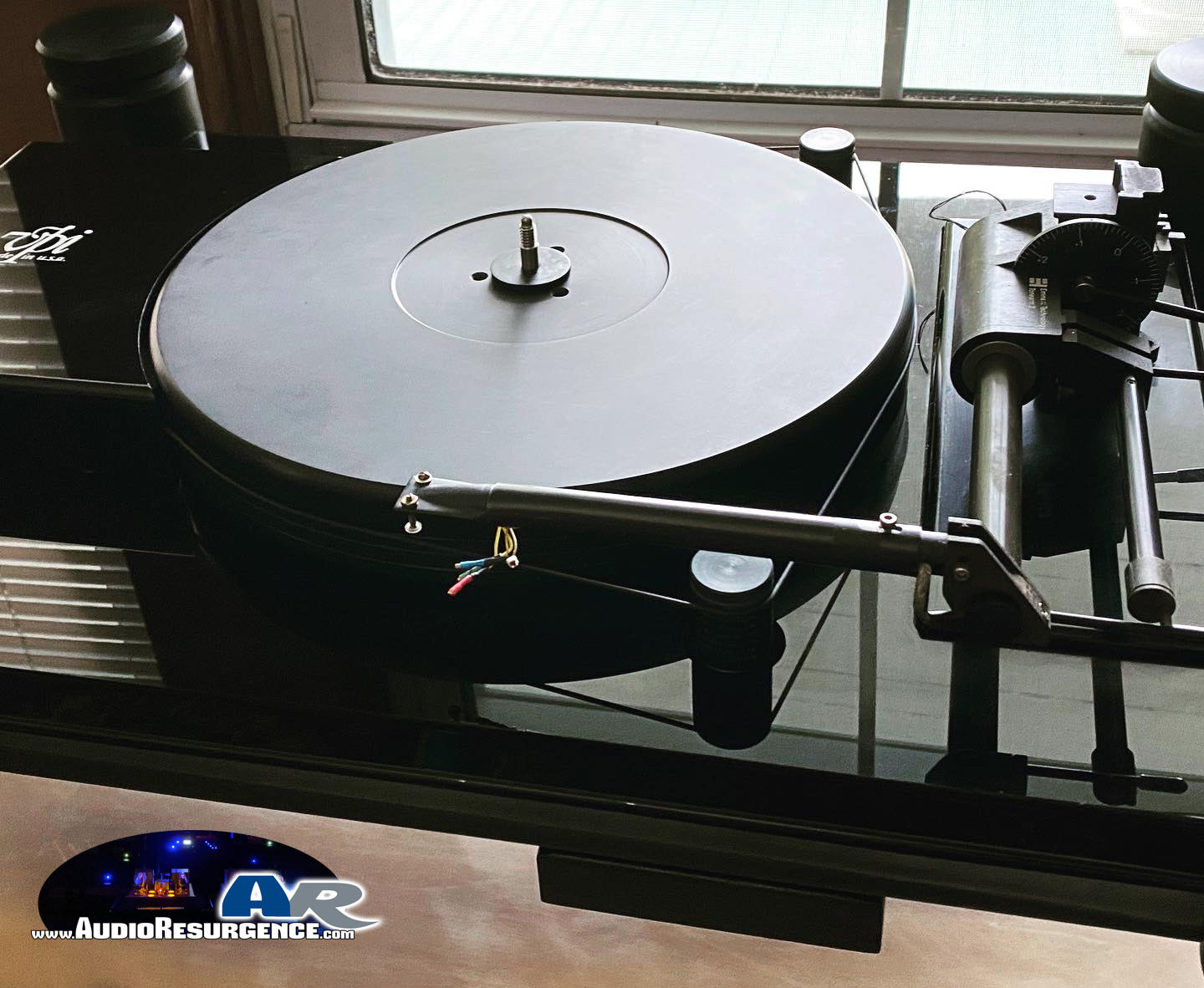
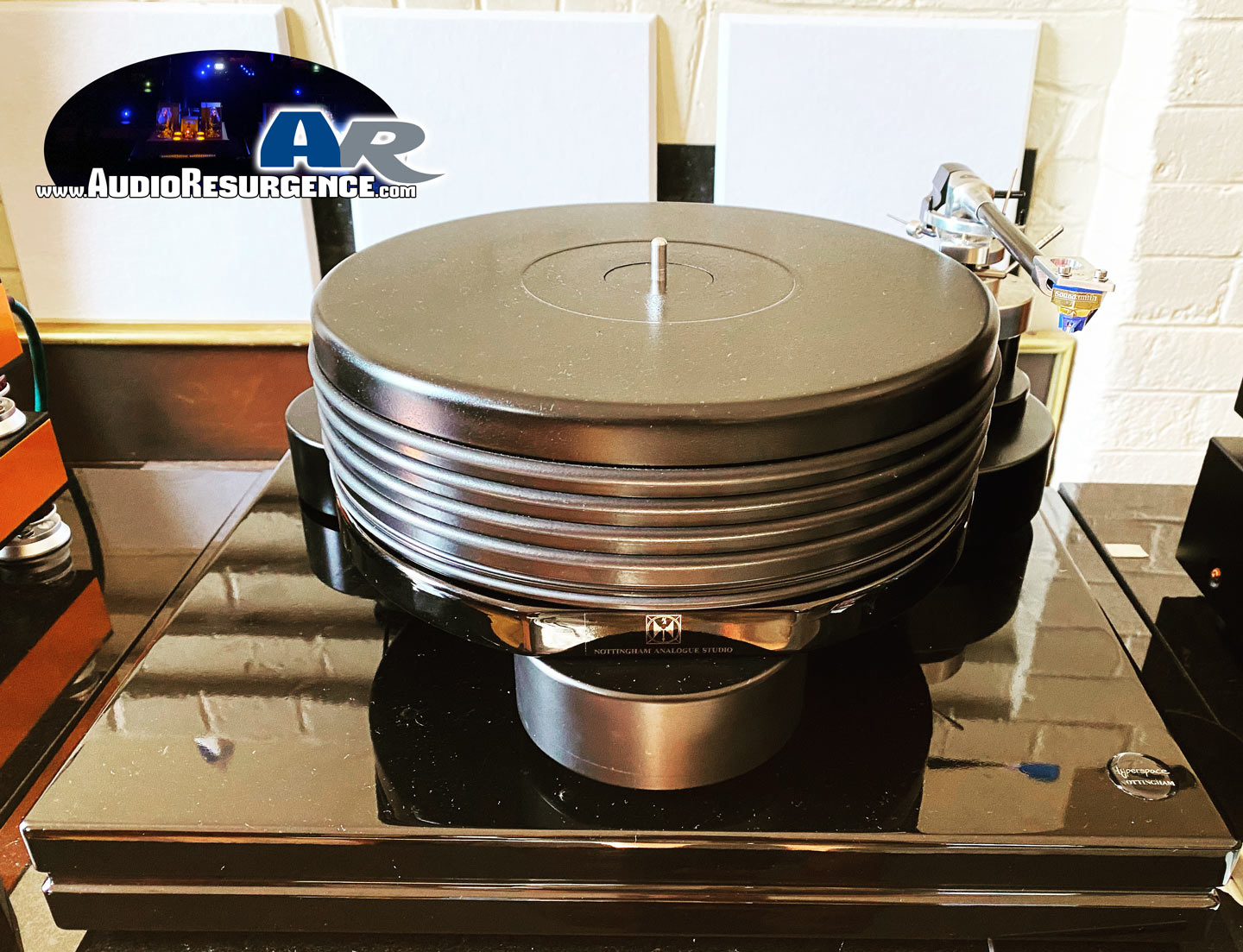
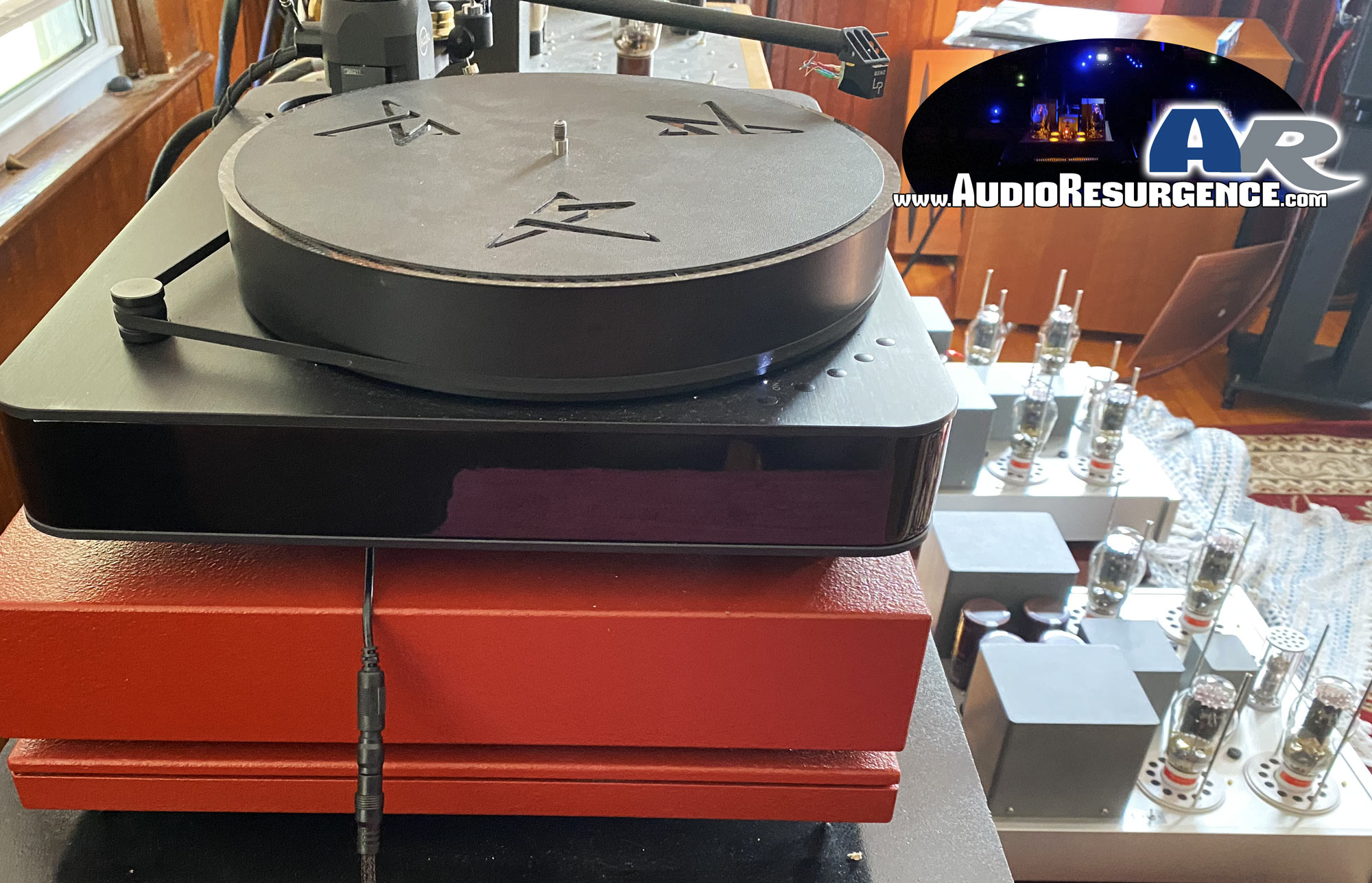
I also ran the Basis Audio Debut Vacuum Platter with both the Graham 2.2 and Phantom tonearms—perhaps the most mechanically refined front-end I’ve owned. The Phantom in particular gave the Steelhead room to stretch its legs in terms of inner detail and soundstage depth. I even revisited a vintage VPI TNT MK I, fitted with an ET2 air-bearing linear tracker, which sounded excellent in the relatively brief time that I owned it. My current setup is a Nottingham Analogue Hyperspace with its matching Ace tonearm, which is an excellent vinyl platform.
I’ve also experimented with a step-up transformer from Audio Tekne, hoping to explore passive gain into the MM input. While the sound could be lovely, I struggled to get it entirely hum-free, and in the end, it wasn’t worth the tradeoff. Fortunately, the Steelhead’s own MM input has sufficient gain to handle even extremely low-output MCs like the 0.1 mV Audio Tekne, rendering an SUT unnecessary in most cases.

Listening Impressions
The Steelhead is stunningly flexible and consistently musical. With a Benz Micro LP-S (0.34 mV), I used the MM input and heard low noise, wide dynamics, and very good tonality. Ultimately I found the LP-S too polite for my tastes, even after switching phono preamps to units from Allnic Audio and the excellent iFi Black Label. With an ultra-low output cartridge like the Audio Tekne MC-6310 (0.10 mV) on the MM input, the Steelhead held nothing back, producing rich, vibrant sound without the need for external step-up transformers.
Tube rolling provides sonic variety. Telefunken 6922s gave faster transients and more air. Amperex Bugle Boys leaned warmer and richer, smoothing edges and bringing vocals forward. Imaging is excellent: instruments have space, depth, and dimensionality, and the stage is wide without sounding exaggerated.
Low frequencies are tight, textured, and extended—more so than many tube designs offer. The Steelhead doesn’t pad the bass or soften the punch. On acoustic bass, kick drums, and deep synths, it lets your cartridge and amp do the talking. Highs remain clean and natural, even at higher gain levels, with no artificial sheen or sizzle.
As a line stage, the Steelhead performs admirably. Its line input and variable output allow it to serve as a standalone preamp. I preferred it over the Conrad Johnson ET5 and CT5, the Thor Audio TA1000 MKII, and several other active linestages I’ve used, but preferred the Allnic Audio L-5000 DHT and the Emotive Epifania linestage. The RF remote is especially handy, and the fact that all gain and loading adjustments are accessible on the front panel makes it a dream for cartridge switching or A/B testing.

Minor Caveats
Like all tube gear, performance varies with tubes, and noise floor, while low, is not invisible. Some listeners may find a slightly warm character depending on their system synergy and cartridge matching. You’ll want to experiment with resistive and capacitive loading to get the best from your cartridge, especially with sensitive designs like the Zephyr.
Also, tube rolling isn’t cheap or always easy. Premium NOS tubes are expensive and are becoming harder to source, yet can meaningfully alter the presentation to suit your system and personal preferences. The Steelhead rewards the effort with meaningful gains in refinement, dimensionality, and tonality, but it all comes at a cost beyond the Steelhead’s already steep MSRP (a shade under $10K, though the latest premium version sold by Upscale Audio is now closer to $11K).
Comparisons
The Manley Steelhead is the most expensive phonostage I’ve owned, so I can only frame my impressions against gear that sits in a lower price tier. That said, I’ve had several phono stages in my system over the years that left a strong impression, some positive, some less so.
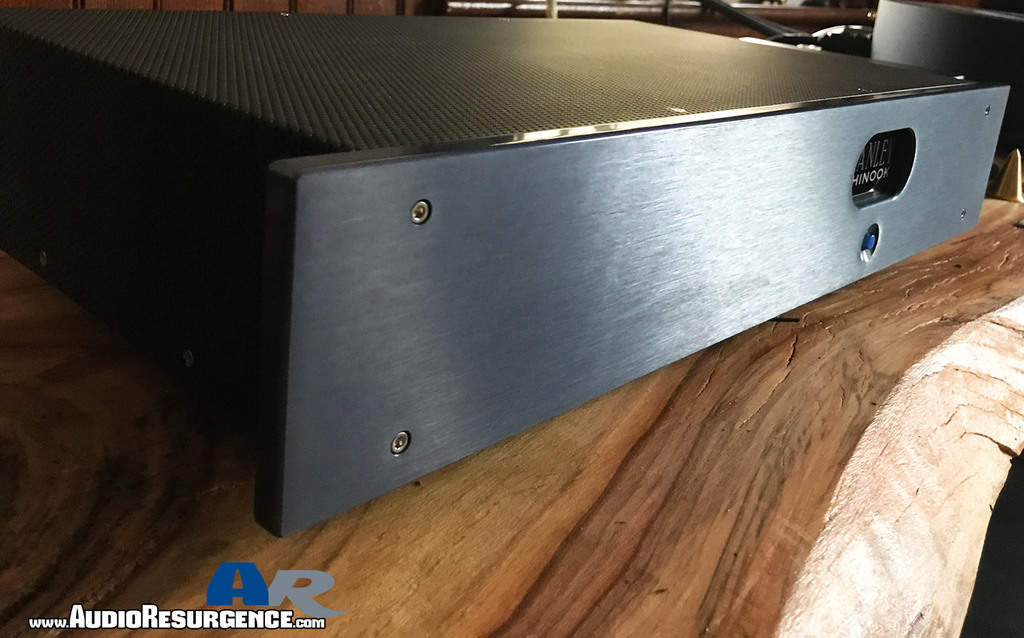
Manley’s own Chinook (MSRP ~$2,899) is a competent performer and a solid value in its price bracket, but compared directly with the Steelhead, it’s in a different league entirely. The Chinook has a warmer, slower presentation with a somewhat romantic hue that can be enjoyable on the right system, but ultimately it lacks the sheer resolving power, speed, and dimensionality that the Steelhead delivers with ease. Tonally, the Chinook feels a touch veiled by comparison; pleasant, but less revealing and less ‘alive’.
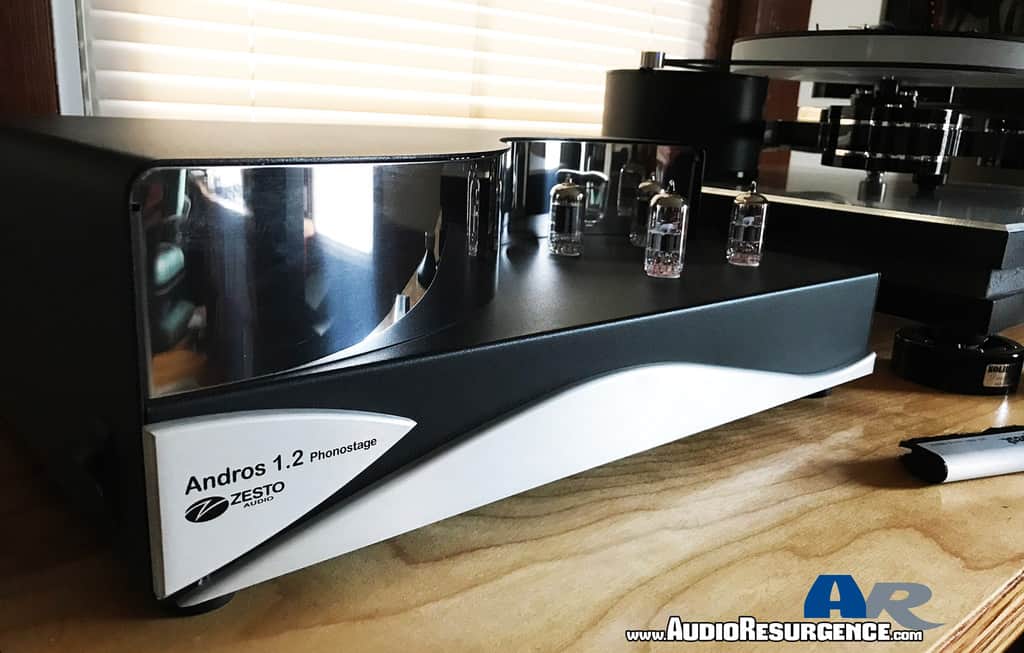
I also spent time with the Zesto Andros 1.2 (MSRP ~$4,700), which offered a clear step up over the Chinook in refinement, dynamics, and spaciousness. It presents music with a ‘zesty’ character (sorry 😉 and with very good timbral texture, and for a time I preferred it over the Chinook which I had in my system at the same time. The Zesto was easy to enjoy but ultimately didn’t deliver anywhere close to the same levels as the Steelhead.
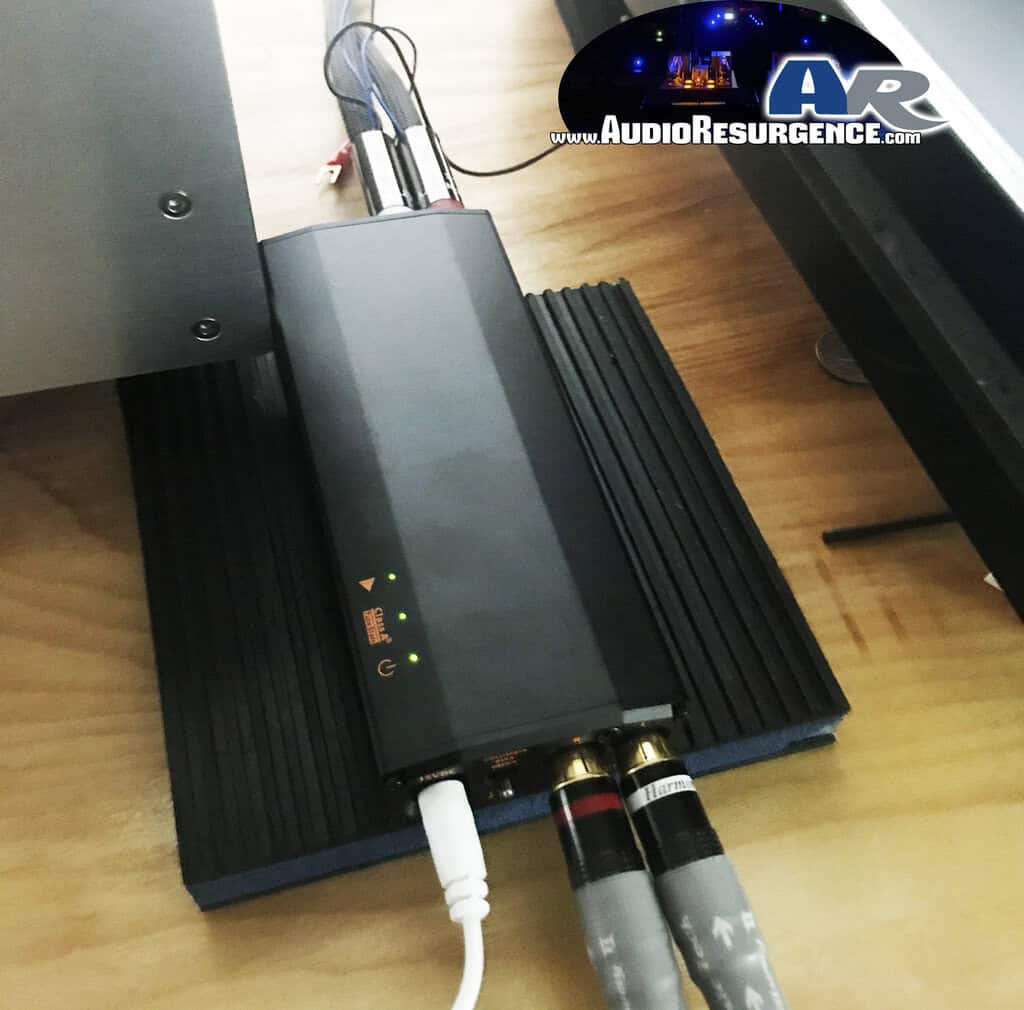
On the other end of the price spectrum, the iFi iPhono3 ‘Black Label’ remains an extraordinary performer for under $1,000. Unless your system is ultra-resolving, the iPhono3 can get you surprisingly close to what the Steelhead offers in terms of detail, tonal balance, and dynamic control. No, it won’t match the dimensional layering, or sheer fluidity of the tubed Manley, but at nearly one-tenth the cost, it’s arguably the best value in phono preamps today. It’s what I’d consider 85% of the experience for 10% of the price.
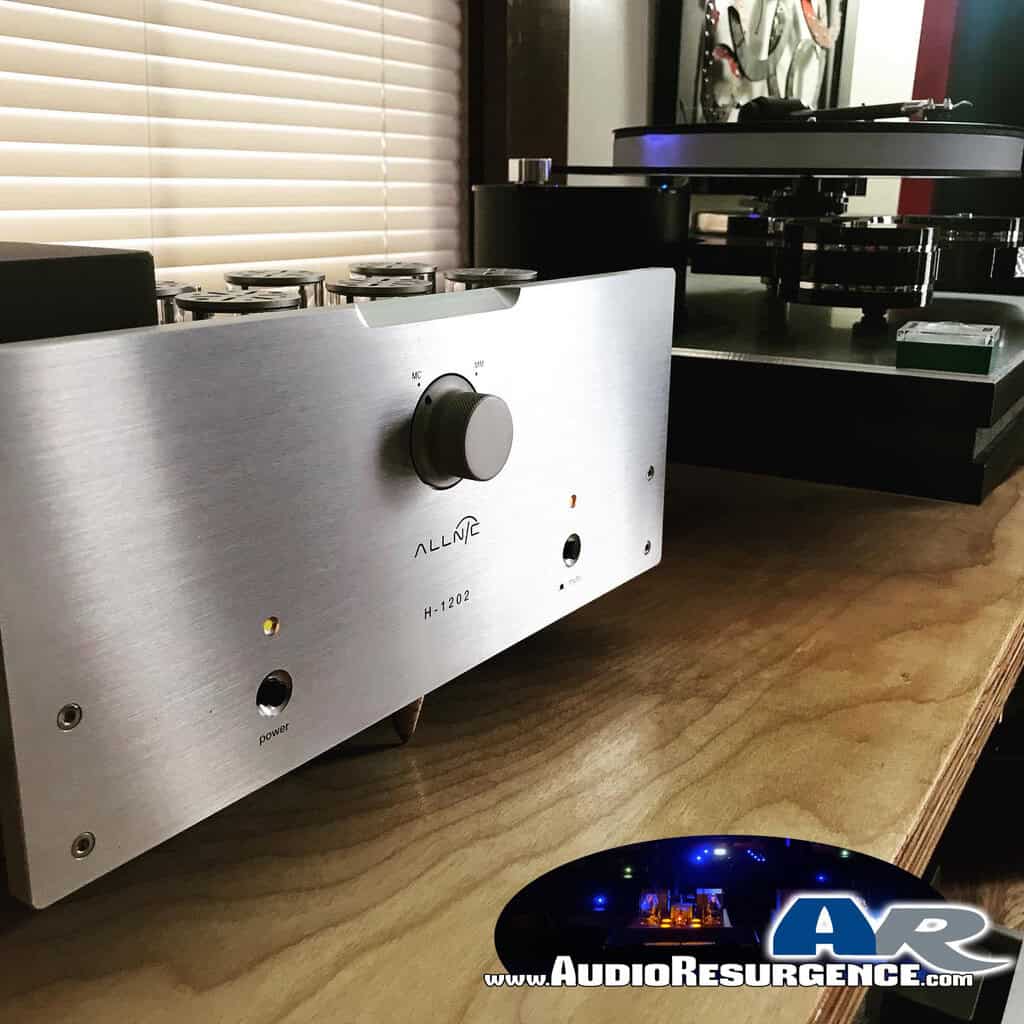
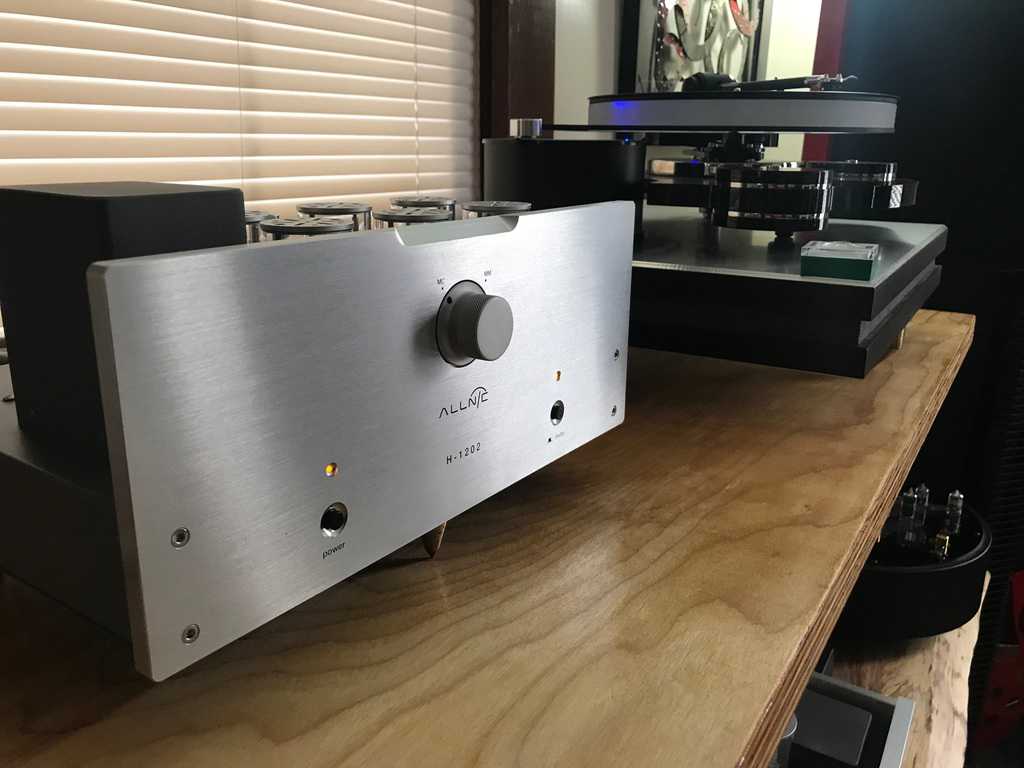
Lastly, the Allnic H-1202 (MSRP $4,000 – now discontinued) was another enjoyable entrant. But when it came to microdetail, textural nuance, and low-level resolution, it just didn’t hold a candle to the Steelhead. The Manley pulls you into the music with a sense of unforced clarity and resolution that few phono stages at any price can match, and certainly not at the Allnic’s price point.
If you’re working your way up the phono ladder, the Steelhead is likely a destination rather than a step. It’s not inexpensive, but once you’ve heard what it does, and more importantly, what it doesn’t do, you may find it very hard to go back.
Wrapping Up….
I trust the Steelhead. It doesn’t call attention to itself, and that’s the highest compliment. It works with nearly anything, it’s transparent, dynamic, tuneful, and extremely versatile. It reveals differences in pressings, cables, tubes, cartridges, etc, without ever sounding harsh or overly analytical.
If you want a reference-grade phono stage with real-world versatility, high headroom, front-panel controls, and the flexibility to adapt to almost any cartridge you throw at it, the Manley Steelhead RC is a solid choice. In a hobby full of tradeoffs, the Steelhead reminds you that musicality and precision aren’t mutually exclusive, they can live quite happily under the same lid.
CAH 2025
Discover more from Audio Resurgence - High End Audio Reviews and Products
Subscribe to get the latest posts sent to your email.

Another essential reason to change to solar power may be the financial savings it gives. Solar energy panels can handle generating electricity for businesses, reducing or eliminating the necessity for traditional sourced elements of energy. This will lead to significant savings on energy bills, particularly in areas with high energy costs. Furthermore, there are numerous government incentives and tax credits open to companies that adopt solar technology, which makes it a lot more cost-effective and affordable.
The technology behind solar energy is simple and easy, yet highly effective. Solar energy panels are made of photovoltaic (PV) cells, which convert sunlight into electricity. This electricity may then be kept in batteries or fed directly into the electrical grid, according to the specific system design. So that you can maximize the advantages of solar technology, you will need to design a custom system this is certainly tailored to your particular energy needs and requirements. This will ensure that you have the right components in position, like the appropriate quantity of solar energy panels as well as the right sort of batteries, to increase your time efficiency and value savings.
[url=https://rumble.com/vusrtk-matthew-michael-dagati.html]Delving into solar energy universe views by Matthew dagati.[/url]
[url=https://thepinkattorney.com/that-will-never-happen-but-then-it-does/#comment-36935]Solar Power in the Aviation Industry[/url] 6829698