

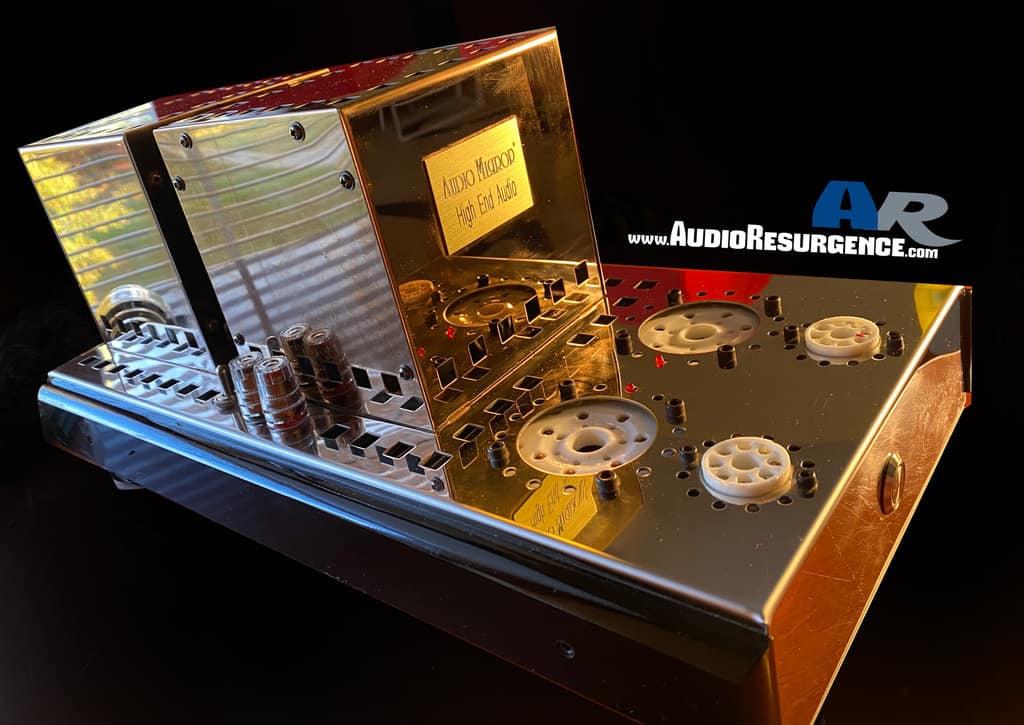
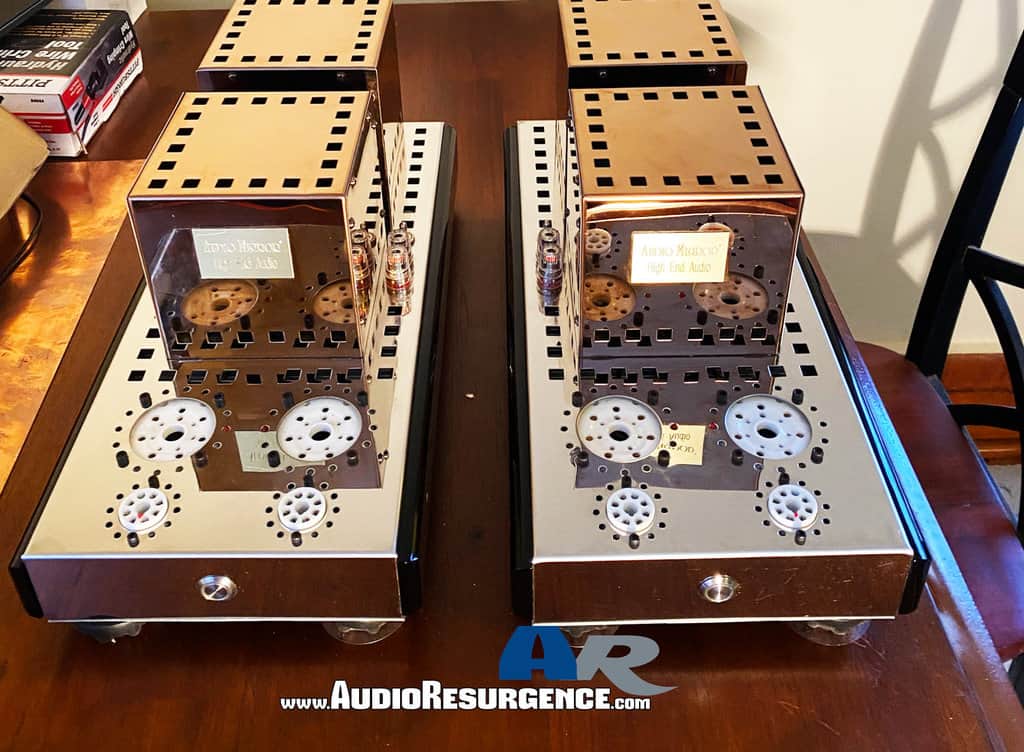
The Audio Mirror 45w SET monoblocks are a visually elegant design, with their polished stainless steel mirror-finished chassis and large output tubes that glow brightly when lit! At their heart are the fairly uncommon 6C33C power tubes. The 6C33C is a high-power, triode vacuum tube with a robust design and excellent audio performance. Originating from Russia, it features a unique construction with a graphite anode and is capable of delivering substantial power output. The tube isn’t really that common in audio amplifier applications, the only well-known tube amp manufacturer that springs to mind who has used this tube in their designs is Balanced Audio Technology (BAT), though I’m sure there are others. (If you happen to own and operate a MiG fighter jet, then it’s likely you’re familiar with this tube as it’s an integral component in your radar scope, or so I read somewhere online.)
The 6C33C’s distinctive characteristics include low internal resistance, making it suitable for direct coupling in audio circuits, and its ability to handle high voltages. The 6C33C’s design contributes to its reputation for producing warm, dynamic, and detailed sound in audio amplifier circuits.
The Audio Mirror monoblocks adhere to a triode design, featuring DC-coupled input and driver stages, and employ a distinctive biasing methodology. Paraphrasing from the Audio Mirror website: This meticulous engineering yields a sound characterized by remarkable dynamism, finely controlled bass, rapid transients, and robust dynamic power, peaking at 100 watts without clipping. (According to the manufacturer, Audio Mirror – link to website)
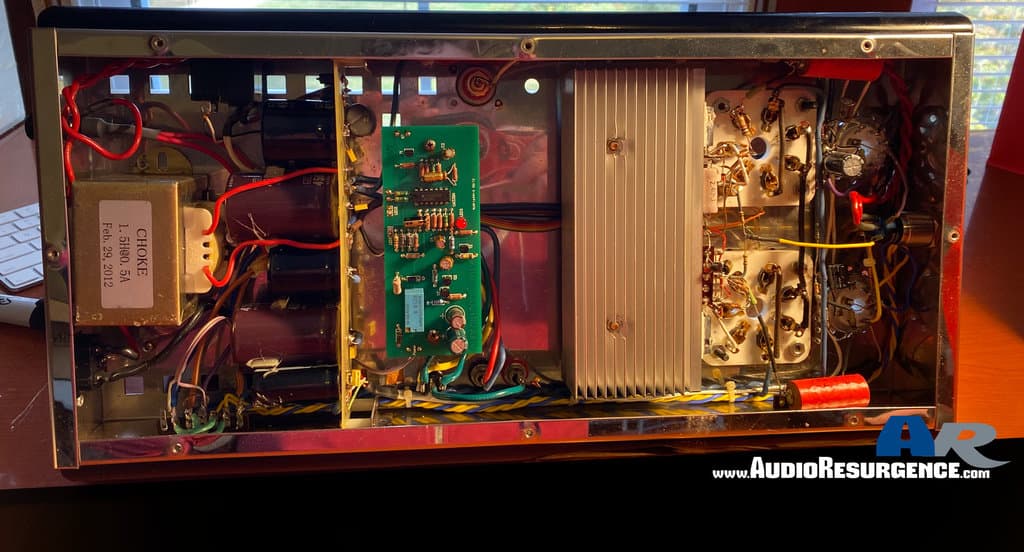
Signal transmission in the Audio Mirror 45w SET monoblocks is facilitated by point-to-point silver wire, complemented by high-end capacitors, resistors, and custom wound output transformers. Company owner and product designer Vladimir Bazelkov (Vlad, to his friends), says these amplifiers derive their greatness from exhaustive critical listening sessions, resulting in nuanced adjustments to deliver a warm, lively sound that defies specification descriptions. While technical specifications offer insights into certain characteristics, subjective attributes such as warmth, airiness, and liveliness can only be fully appreciated through auditory perception.
The Audio Mirror 45w SET monoblocks are designed for speakers ideally with a sensitivity of 88dB and above, the monoblocks can function successfully with less efficient speakers, but for optimal performance at higher volumes, speakers with 88dB sensitivity or higher are recommended. According to the manufacturer, a recent redesign of the output transformers has significantly enhanced detail and tonality, yielding improvements in low-end articulation, clearer highs, and refined midrange and vocals. (The monoblocks are currently listed as a ‘Legacy Product’ on the Audio Mirror website, and Vlad has since released a new version of the amp – the ADDICTION monoblock. There’s also a REFLECTION version of these amps, which have aluminum side panels as heat sinks, which mine do not)
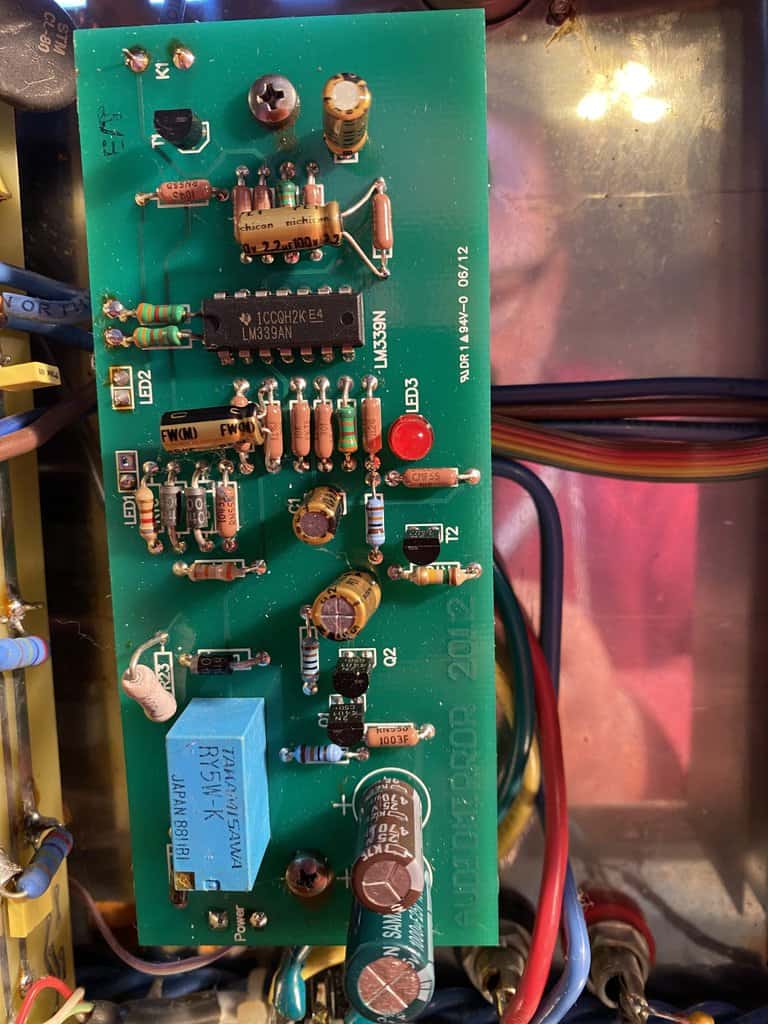
Newer iterations of the earliest SET45 amps are self-biasing and the utilization of 6C33C Russian tubes contributes to the powerful and superior sound, albeit with occasional quality control challenges. To address this, built-in protection mechanisms monitor the output tubes for over-biasing, overvoltage, arcing, and overdriving, automatically shutting down the high tension (HT) in the event of problems, and providing for a visual indication of the faulty tube.
Constructed from stainless steel, the monoblocks exhibit a striking visual aesthetic, as you can see in the photos below.
Audio Mirror 45w SET monoblock Specifications
| 45 watts per channel at 8 ohms |
| 90db S/N ratio |
| 0.8% T.H.D. at 45W |
| input signal 1v/47kohm |
| 25hz-65khz |
| 42lb weight |
| optional balanced input |
| dimensions 9x18x9 inches |


The Story:
I purchased these with the intent of bringing them in for review and then using them in my second or third system. I’ve owned and used them for almost a year now, so it’s time to summarize my time with them before moving them along to fund a new project.
November 2011
Getting them home I pulled the 6SN7 and 6SL7 tubes and tested them on the B&K 700, and both tested well below functional specs. So the first order of business was to replace those. I went to Early Bender at HiFi Town for replacements, as Early is a very knowledgeable guy when it comes to anything to do with tubes and vintage gear, so a big shout out to Early, whose Website can be found here. He fixed me up with some nice vintage tubes that test well and should hopefully last a long time.
There’s a useful video I found on YouTube, that walks you through the process https://www.youtube.com/watch?v=6sO3kXFpZWg
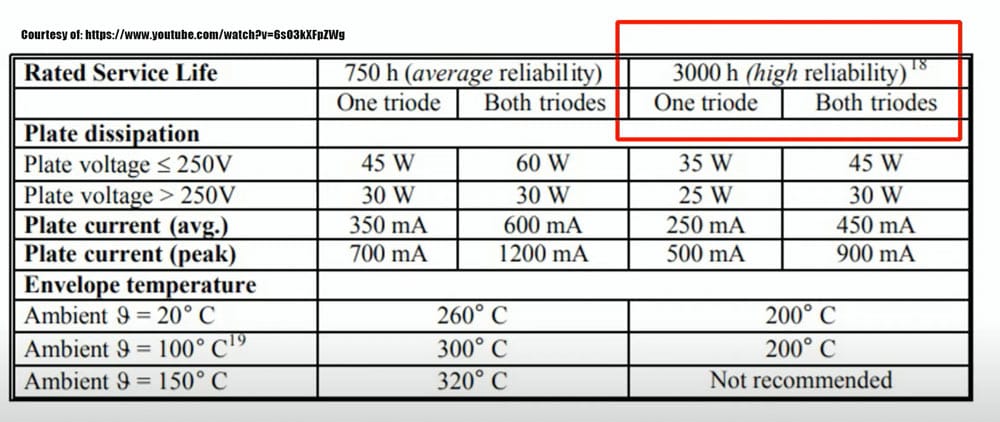
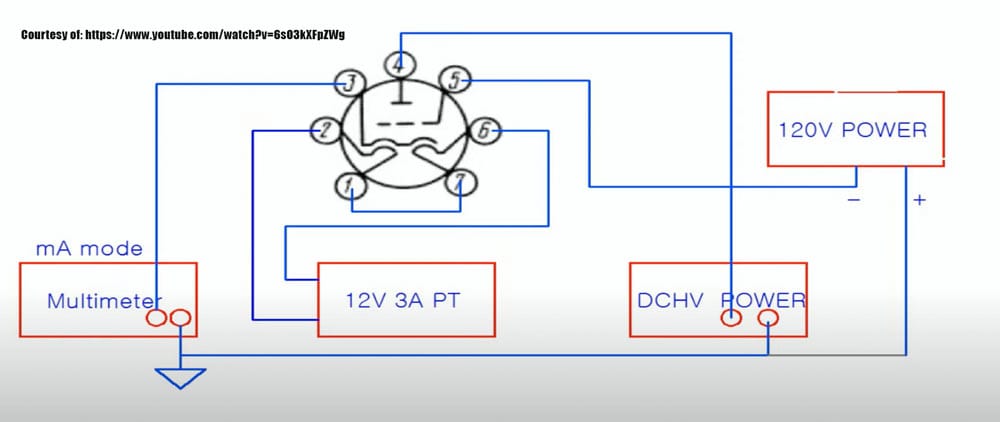
Since Vlad at Audio Mirror has designed these amps with belt and braces safety, to protect the amps from being damaged by out-of-spec tubes, It’s possible to just insert the tubes and basically test them safely in the amps.
There’s a break-in procedure for new tubes, and it involves flicking a switch on each monoblock, which disables the outputs, and then running the tubes for 48 hours. It’s simple enough to do, but I missed this requirement when I brought the amps home, and consequently, I had a couple of power tubes go bad on me.
Rather than draw from my stash of ‘unknown status’ tubes, I went ahead and purchased 4 NOS tubes on eBay, from a seller in the Ukraine. They arrived promptly in about 10 days, and, after employing the correct break-in procedure, have worked fine for the past 10 months or so.

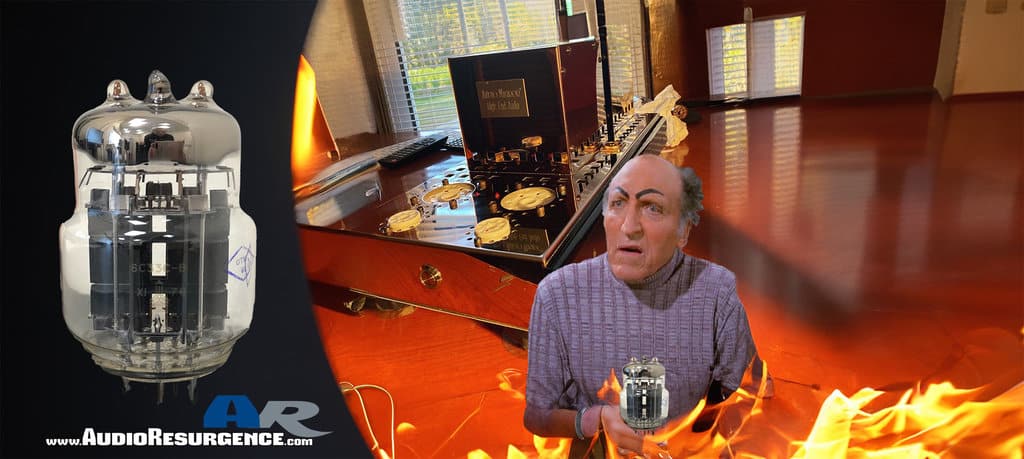
So hot in fact that I decided to purchase a quad of Pearl tube coolers from Parts Connexion in Canada. They’re a pain to fit over the tube as they grip the tube glass tightly, but they appear to perform well.
Here’s some pics and also a video that I threw together for YouTube to show the amps in operation for any potential buyer:

Listening
In the past year or so I’ve used the amps with a few different speakers, including the Emerald Physics CS2P open baffles, the Merlin TSM BME discussed here, and a pair of Audio Physics Yara Evolution bookshelf.
These are fairly modest speakers, but each very revealing of how they’re being driven. I hope to have on hand a pair of Voxativ speakers in the coming weeks, and if that materializes I may update this review.
Here’s a few pics of the amps with associated equipment. Though not all of it is shown below, I’ve used the following partnering gear in this system:
- Lumin U1 Mini with SBooster upgrade
- Aurender N10 Streamer
- PS Audio DSJ DAC
- Chord 2Qute DAC
- Ayre Codex DAC (shown)
- Art Audio DM-VPS Linestage
- Don Sachs D2 Linestage
- REL Carbon Special Sub
- Martin Logan Grotto Sub
- Emerald Physics CS2P speakers
- Merlin TSM Black Magic Edition speakers
- Audio Physic Yara Evo


The Audio Mirror 45w SET monoblock amplifiers delivered good sound quality across every iteration of my system. These amps, powered by the unique 6C33C-B triode tubes, struck a nice balance, blending the energy and immediacy of a 45 tube with the refinement and transparency typically associated with a 300B. The result was a lively, yet detailed presentation, underpinned by a solid and extended low-frequency foundation that brought the music to life.
Sonic Characteristics
The Audio Mirrors exude a sense of effortless power and control. Even when paired with relatively challenging speakers like the Merlin TSM-MM speakers, with their 87dB sensitivity and an impedance that dips as low as 6.5 ohms, the amps drove them with room-filling authority. What’s particularly striking is how these amps manage to feel much more powerful than their rated output. They consistently exhibited a grip over the music, delivering clean, undistorted sound even at higher volumes.
- Transparency: The amplifiers bring an impressive level of clarity to the music. Details emerge naturally, without any artificial edge or harshness. Vocals, in particular, are rendered with a beautiful immediacy and presence, making it feel as if the singer is right there with you in the room.
- Midrange Magic: Midrange reproduction is where the Audio Mirrors shine brightest. The tonal balance is quite lush yet not overly euphonic, instruments such as strings and woodwinds sound rich and authentic, the Reflection amps capturing every subtle nuance of the performance.
- Bass Control: While tube amplifiers sometimes get criticized for loose or flabby bass, the Audio Mirror 45w SET defy that stereotype. They provide taut, punchy low-end reproduction, with enough weight and slam to satisfy even bass-heavy genres like electronic, dance, or rock.
- High-Frequency Detail: The treble is extended and sweet without being overly bright or fatiguing. Cymbals, hi-hats, and upper harmonics shimmer naturally, adding air and dimension to the overall soundstage.
Dynamics and Soundstage
One of the most captivating aspects of these monoblocks is their ability to handle dynamic swings with ease. From the quietest whispers of a solo piano to the explosive crescendos of a full orchestra, the Audio Mirror monoblocks maintain their composure. Microdynamics are also handled beautifully, allowing for subtle shifts in tone and texture to come through with startling realism. Time spent with the little Audio Physic Yara Evo really brought to light the tone and texture and subtle details that these amps are capable of delivering.
The soundstage is expansive, both in width and depth, creating a three-dimensional listening experience. Instruments and vocals are precisely placed within the soundfield, making it easy to visualize the layout of a live performance. The amps create an immersive environment where the listener feels enveloped by the music.
System Synergy
The Audio Mirror 45w SET showcased their versatility with a variety of components and musical styles. Paired with the Merlin TSM-MM BME speakers, they produced a cohesive and engaging sound that never felt strained. Switching to a smaller speaker like the Audio Physic Yara, with its capacity to reveal micro details in abundance, the amps delivered all of the detail and nuance without ever sounding harsh or etched.
Their inherent warmth and musicality make them an excellent match for digital sources, helping to mitigate any harshness or sterility that might be present. I have not yet paired them with a high-quality analog source but would expect the Audio Mirrors to emphasize the natural warmth and richness of analog sound.
Wrapping Up
The Audio Mirror 45w SET monoblock amplifiers are a good choice for anyone seeking high-end sound from the used marketplace without the compromises often associated with tube amplification. Their ability to combine power, finesse, and tonal accuracy makes them a standout choice with any reasonably efficient speaker system, though the manufacturer does recommend a nominal 8-ohm impedance to maximize their capabilities.
CAH December 2024
I updated this review in July 2025 following a note from the manufacturer, who pointed out that there’s a version of the amps without aluminum side-panel heatsinks (mine), and an updated version with heatsinks, termed ‘REFLECTION’. I’d inadvertantly referered to my amps in the review as ‘Reflection’, simply because I wasn’t aware of the distinction. Any reference to this model/spec change is omitted from the manufacturer’s website, so how the hell was I supposed to know?
Discover more from Audio Resurgence - High End Audio Reviews and Products
Subscribe to get the latest posts sent to your email.

Are these working now? What arr your thoughts on sound quality? I see they have released replacement model for these at 4 times the price!! Same innards different chassis??